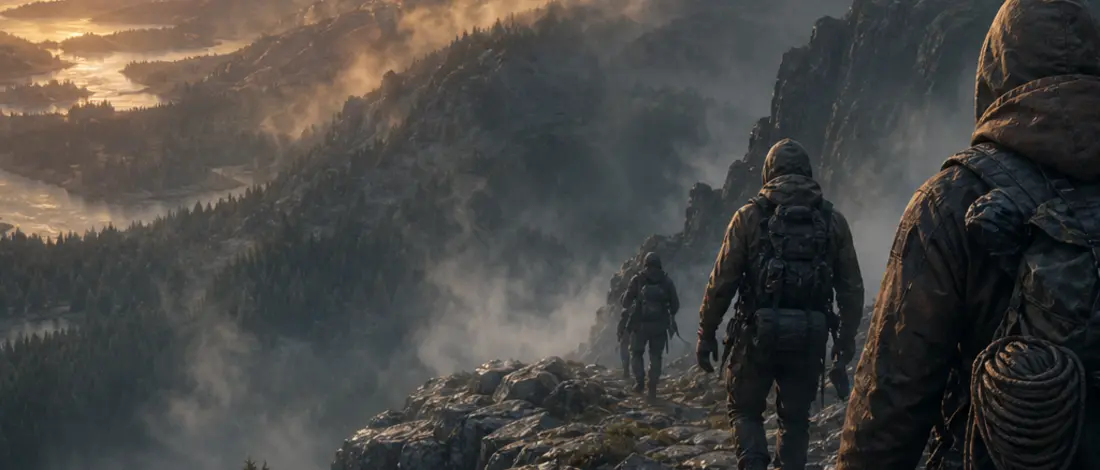
The magic of open world multiplayer games is not just that they let friends roam together. It is that they make the world itself feel like an active participant in every journey, forcing groups to read terrain, manage fear, and make choices that matter. When the map is dangerous, exploration stops being background movement and becomes a source of suspense, surprise, and unforgettable group stories.
Why Open World Multiplayer Games Feel More Intense When the World Can Fight Back
In safer co-op experiences, travel is often just a path between objectives. In dangerous worlds, movement becomes meaningful decision-making. Do you cut through the forest for speed, or stay on the ridge for visibility? Do you investigate the ruined tower, or save supplies for the trip home? The presence of threats turns even ordinary navigation into a chain of tradeoffs.
That uncertainty changes how players feel about the environment. A hill is not just scenery if it might hide enemies. A swamp is not just a biome if it drains resources and slows escape. Shared risk makes players more alert, more communicative, and more invested than they would be in a safe sandbox. In the best open world multiplayer games, tension spikes are memorable because everyone in the group felt them at the same moment.
- Simple travel becomes a test of planning, timing, and nerve.
- Unknown terrain gives every landmark emotional weight.
- Danger creates group memories far stronger than routine roaming.
Shared Discovery Is the Secret Engine Behind Great Open-World Action Adventure Games
One of the deepest pleasures in co-op exploration is not just finding something rare. It is seeing someone else react to it with you. A hidden cave, a strange structure, or an unexpected overlook feels bigger when discovery becomes a shared moment. That is a major reason great open-world action adventure games are so good at producing excitement without relying on constant scripted spectacle.
Discovery also sparks instant social play. One person scans for danger, another checks for loot, and someone else starts theorizing about what this place means or where it connects. The world invites conversation before it asks for combat. That mix of wonder and caution is powerful because nobody fully knows what is ahead, yet everyone is already involved in solving it together.
The best open-world action adventure games reward curiosity without making it passive. Exploring a suspicious canyon or broken outpost feels active because the group is always balancing possibility against risk. Curiosity matters more when it costs something.
Multiplayer Survival Games Turn Trust Into a Core Part of the Adventure
Multiplayer survival games are especially good at turning cooperation into something more than a feature. Scarcity makes every shared resource meaningful. Food, ammunition, medicine, crafting materials, and shelter are not just items on a checklist. They are pressure points that reveal how a group actually functions when choices are tight.
This is where trust becomes part of the core gameplay loop. Teams naturally drift into roles based on temperament and skill: the cautious scout, the builder who secures a fallback point, the navigator who remembers routes, the defender who holds the line when plans break down. Those roles do not have to be assigned by the game. They emerge from repeated action.
- Sharing limited supplies sends a stronger social signal than splitting easy rewards.
- Covering a retreat or staying behind to help a teammate builds confidence over time.
- Even failure feels easier to accept when it came from a collective gamble instead of isolated bad luck.
That is why multiplayer survival games often feel more personal than other co-op formats. Small decisions accumulate into a real sense of reliability.
Emergent Stories Beat Scripted Moments in Dangerous Open Worlds
Players rarely talk for years about the tutorial objective they completed exactly as intended. They talk about the night everything went wrong and somehow worked out anyway. A last-second rescue, a panicked detour through hostile terrain, a desperate recovery run after losing gear: these are the stories that stick because they were not prewritten. They happened through systems colliding in real time.
This is one of the biggest strengths of open world multiplayer games. Outcomes are never fully controlled, so even routine errands can become dramatic. A simple supply run changes tone when weather shifts, enemies appear from the wrong direction, or another player group disrupts the route. The world keeps producing new combinations, and those combinations create stories with a sense of ownership that cutscenes cannot replicate.
Good scripted moments can still be exciting, but emergent stories feel more personal. They belong to the people who made the calls, took the risks, and survived the chaos together.
Why Risk, Loss, and Recovery Create Stronger Social Bonds
Games become socially powerful when they create emotional peaks that groups can share. Danger does exactly that. The fear of losing progress, the rush of a narrow escape, and the relief of regrouping after disaster all hit harder when friends are part of the same event. High-stakes moments do not just make the game exciting. They help create group identity.
Recovery is especially important. Easy success is satisfying, but rebuilding after a setback often produces the stronger memory. When a team regathers supplies, rethinks strategy, and returns to the same hostile area with better coordination, the result feels earned in a deeper way. That pattern is a huge reason multiplayer survival games keep people emotionally invested over long stretches.
- Risk pushes players to communicate clearly.
- Loss teaches planning without needing a lecture or tutorial.
- Recovery turns frustration into pride when the group adapts together.
What the Best Open World Multiplayer Games Get Right About Freedom and Friction
The strongest open world multiplayer games understand that freedom alone is not enough. If players can do anything but nothing pushes back, choices lose meaning. The world needs friction: hostile terrain, resource pressure, dangerous encounters, and travel decisions that force tradeoffs. That friction is what makes freedom feel valuable instead of empty.
Well-designed systems also reinforce one another. Traversal affects resources. Crafting supports combat. Exploration opens strategic options. Shelter, scouting, fighting, and movement all feed the same survival loop, which keeps the experience coherent. Many respected open-world action adventure games succeed because they make these systems feel interconnected rather than siloed.
The key difference is between good friction and bad friction. Good friction creates suspense, teamwork, and memorable choices. Bad friction feels like delay for its own sake. When the balance is right, players can approach the world in different ways without the game forcing everyone into the same role or playstyle.
Why This Genre Keeps Building Communities Long After Launch
Dangerous shared worlds give people a reason to come back because the experience is never only about content consumption. Groups return to set their own goals, test new routes, take bigger risks, or simply see what kind of trouble they find tonight. That repeatability is social as much as mechanical, and it is one reason open world multiplayer games retain such a strong pull.
Communities form around stories, rituals, and inside jokes. The near-disaster on the bridge, the wildly overconfident expedition, the time a cautious plan somehow ended in total chaos: these moments become part of a group language. That is why multiplayer survival games often build loyal communities long after launch. Players become attached not just to the map, but to the people they learned that map with.
At their best, these games combine challenge, discovery, improvisation, and friendship in a single loop. The world threatens the group, the group adapts, and the result is a kind of shared memory machine that safer or more scripted co-op experiences rarely match.