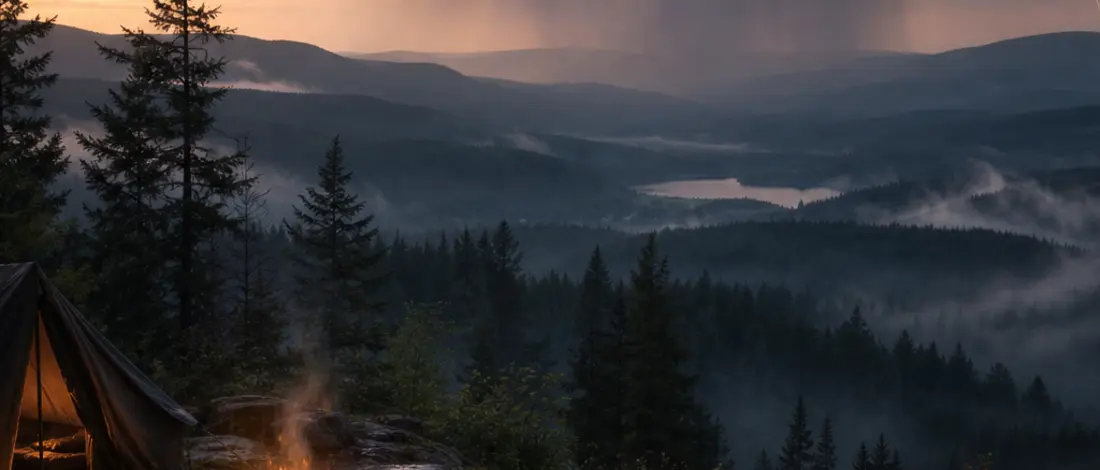
A fixed map can be beautiful, but it only starts to feel alive when the sky turns against you. In the best survival games, weather is not background decoration or a mood filter laid over gathering, crafting, and combat. It is a system that changes what matters from one minute to the next, pushing players to rethink shelter, fire, visibility, stamina, and cooperation. That shifting pressure is what turns routine scavenging into stories people actually retell, and it is why weather remains one of the most powerful tools for making a harsh world feel believable.
Why weather makes survival games feel less scripted and more alive
One of the defining strengths of survival games is that they can make a familiar space feel different every time you cross it. A hillside that was safe at noon becomes dangerous in fog. A riverbank that looked like an easy route becomes a freezing trap under rain and wind. That constant recontextualizing matters because it breaks the sense that the world is waiting for the player to arrive and perform the expected sequence of actions.
Weather creates pressure without needing an enemy AI to kick down the door. Rain can extinguish comfort by soaking clothes and wood. Wind can spread fire or make a camp feel exposed. Fog reduces visibility, turning navigation into a risk calculation instead of a solved problem. Storms are especially effective because they combine audiovisual presence with immediate consequences, making the environment feel active rather than passive.
That is also why weather produces some of the most memorable moments in survival games. Players remember the trip home that became a desperate crawl through darkness, or the hunt abandoned because thunder rolled in at the worst possible time. A changing forecast gives the world a sense of intention, even when the system itself is simple.
Environmental pressure works best when it changes player priorities
Good weather systems do not just lower a health bar. They force a reprioritization of goals. A player who set out to gather ore may suddenly care more about finding overhangs, conserving stamina, or reaching a fire source before night. If visibility drops, the shortest route may no longer be the safest. If temperature plummets, crafting can wait while shelter becomes urgent.
This is where pacing becomes interesting. Strong survival games alternate between preparation and crisis: the calm loop of stocking fuel, repairing clothing, and planning routes, followed by a weather event that tests whether those choices were smart. The environment starts to feel like an opponent because it punishes complacency but rewards foresight. Even a small storm can shift the entire play session from expansion to recovery.
- Cold makes fire, insulation, and timing more important than loot value.
- Heat pushes players toward shade, water, and slower travel windows.
- Fog changes combat and scouting by shrinking the distance at which threats are readable.
- Wind can make exposed terrain feel much riskier than the map alone suggests.
Rain, cold, and heat are simple mechanics with big consequences
Rain, cold, and heat sound basic on paper, but they become powerful when they stack. Wetness lowers thermal protection. Lower temperature drains stamina faster or increases calorie demand. Exposure turns a simple trip into a chain of escalating mistakes. The player is not only losing numbers; they are feeling a closing window of safety. That emotional pressure is where elegant survival design often lives.
A good heat game shows the other side of the equation. Instead of freezing, the player is managing overheating, dehydration, and the cost of moving during the wrong hours. Suddenly daytime travel is not just visually bright; it is strategically expensive. Shade, clothing choice, water storage, and route planning all matter more. In a well-tuned heat game, the desert or sun-baked field becomes a schedule puzzle as much as a resource puzzle.
The key is readability. Players should understand why they are suffering and what they can do about it. If rain makes clothing heavy, or heat increases thirst, the feedback needs to be clear enough that failure feels like a lesson rather than a trick. Many great survival games thrive on small statistical shifts because those shifts create strong emotional outcomes: hesitation, panic, relief, and the joy of barely making it back to camp.
Storms and lightning create drama because they are both threat and spectacle
Storms work so well because they already carry meaning before any numbers are attached to them. Dark clouds, thunder, and violent wind tell players that conditions are changing now. In a survival space, that spectacle matters because it sharpens attention. The player is no longer glancing at a status meter; they are listening, watching, and anticipating impact.
A strong lightning game turns that spectacle into layered gameplay. Lightning can threaten exposed players, ignite flammable terrain, reveal silhouettes in the distance, or briefly help navigation before throwing everything back into darkness. That mix of danger and information is why a good lightning game feels so tense. You are seeing more and trusting less at the same time.
Wind and thunder also have mechanical weight when designers let them. Gusts can slow movement, push smoke, or affect projectile use. Thunder can mask footsteps or make voice communication harder in co-op. Storms are most memorable in survival games when they do not just look dramatic but change combat, travel, and decision-making all at once.
The best weather systems create emergent cooperation, not just inconvenience
Weather is especially valuable in co-op because it gives teams a shared problem that is not solved by simply dealing more damage. Someone has to gather fuel. Someone has to finish a roof segment before the rain worsens. Someone has to scout a safe path through low visibility while another player stays back to manage food, water, or a vulnerable fire. Those role splits emerge naturally when the environment is volatile.
The richest co-op survival games make weather something the whole group interprets together. One player sees dark clouds and argues for retreat. Another thinks there is still time for a supply run. That disagreement is productive because it creates social storytelling: the rescue when a teammate overextends, the argument over whether to sleep through a storm, the relieved laughter after a shelter barely holds.
- Shared shelter building turns construction into urgent teamwork.
- Fire management becomes a rotating responsibility instead of a passive buff.
- Scouting in fog gives value to communication and route memory.
- Supply runs during storms create dramatic risk for the entire group, not just one player.
Design examples that make weather feel systemic instead of decorative
Decorative weather changes the mood. Systemic weather changes the game state. The difference is simple: if rain only darkens the screen, it is ambience; if rain also affects body temperature, fire reliability, mud traversal, scent trails, or visibility, it becomes part of the simulation. Players immediately feel the distinction because one version is cinematic while the other demands adaptation.
The best implementations connect weather to multiple systems at once. Terrain becomes slippery or slower to cross. Stamina drains faster in headwinds. AI hunts differently when sightlines shrink. Crafting priorities shift toward insulation, waterproofing, or storm-ready structures. Forecasting matters too. A visible change in clouds or wind direction gives players room for counterplay, which is essential if designers want harsh conditions without frustration.
Cause and effect should stay legible. If a campfire fails, players should connect that failure to soaked fuel, poor placement, or gusting wind. If wildlife grows bolder at night during a storm, that behavior should feel understandable within the world. The weather in great survival games feels alive because it is not a single system at all. It is a pressure layer woven through stamina, visibility, AI, crafting, and movement.
What survival designers should learn from great weather-driven tension
The strongest lesson is that weather needs four things: readability, consequence, variety, and recovery. Readability tells players what is happening. Consequence ensures the system matters. Variety keeps the pressure from becoming routine. Recovery gives players a way to stabilize, regroup, and prepare for the next shift. Without recovery, weather becomes exhausting. Without consequence, it becomes wallpaper.
Designers also have to balance realism with agency. A punishing blizzard or a brutal heat game scenario can be exciting, but only if players have meaningful responses through shelter, clothing, timing, tools, and teamwork. The same goes for the ideal lightning game moment: danger should feel frightening, not arbitrary. Players need enough information to make a good call, even if they still fail under pressure.
That balance is a big reason weather helps survival games stand out in a crowded genre. Resource loops alone can become mechanical, but a living world keeps reinterpreting those loops. Food, fire, thirst, stamina, routes, and trust all mean something different when the sky refuses to stay still. The worlds players remember are usually the ones that demanded adaptation, because adapting is what makes survival feel real.