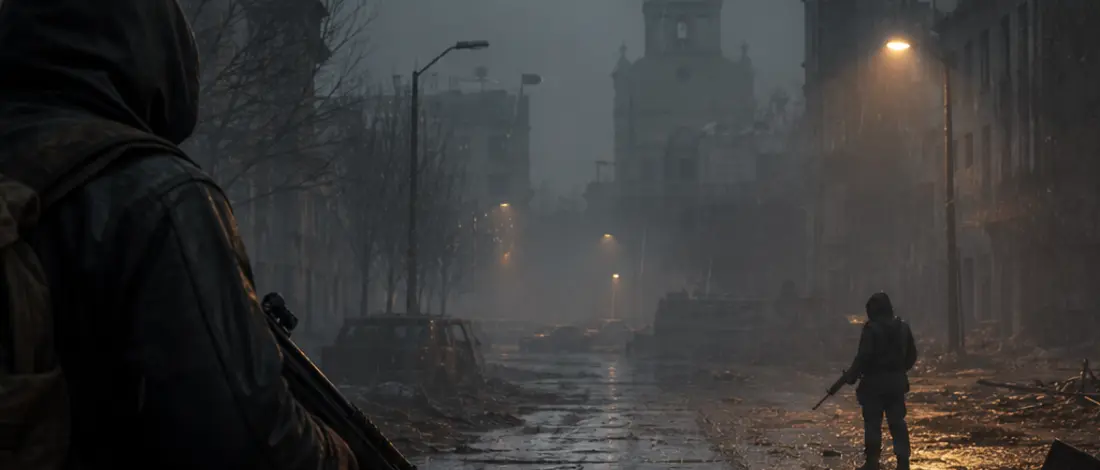
In games like dayz, the strongest emotion is often not fear of zombies or hunger; it is the unstable space between needing another player and suspecting them at the same time. Survival multiplayer turns ordinary interactions into loaded decisions because death has consequences, supplies are limited, and strangers are never fully readable. That is why trust and betrayal land so hard in this genre. They are not side stories layered on top of survival. They are the mechanism that makes survival feel human, volatile, and worth remembering long after a session ends.
Why trust matters more when survival is never guaranteed
When a game makes food, ammo, medicine, shelter, and safe movement genuinely scarce, trust stops being a social extra and becomes a survival instrument. In harsh multiplayer sandboxes, you are never just evaluating personality. You are calculating risk under pressure: who can help carry supplies, watch a flank, share antibiotics, or guide you through a dangerous town without putting a round in your back. In that sense, games like dayz make trust useful before they make it emotional.
That is why another player feels so significant the moment they appear. A stranger might double your odds of making it to the next settlement, or they might wait until you lower your guard and take everything. The tension comes from the fact that both possibilities are credible. You do not trust because the game asks you to be friendly. You trust because going alone is often slower, weaker, and more exposed than cooperating, even when cooperation is dangerous.
Scarcity makes every alliance feel risky and valuable
Scarcity is what gives alliances their sharp edge. If loot were abundant, helping someone would feel casual and betrayal would be little more than mischief. In survival multiplayer, resources are often contested, travel is expensive, and a single item can change the next hour of play. A spare bandage, a loaded magazine, or a warm place to log out has weight because it may be difficult to replace. Every shared resource carries an opportunity cost.
That cost is what makes generosity memorable. Handing over food to a hungry player is not just clicking a menu option; it means giving away security you might soon need yourself. The same logic applies to base codes, route information, medical supplies, and entry to shelter. Scarcity keeps asking the same hard question in different forms: do you help them, avoid them, or remove the uncertainty before they can betray you first?
- Limited loot makes cooperation practical, but never comfortable.
- Shared supplies create emotional investment because the loss is real.
- Contested spaces force players to balance self-interest against long-term survival.
- The fewer the resources, the more every alliance feels temporary and precious.
Why betrayal hits so hard in games like dayz
Betrayal hurts in survival games because it rarely costs only a life. It can erase an evening of scavenging, careful navigation, inventory management, and close calls. The gear matters, but so does the time and attention attached to it. A late betrayal after thirty minutes of cooperation feels worse than a random ambush because you invested judgment, not just equipment. You made a read, committed to it, and paid for being wrong.
The genre also thrives on partial trust rather than total belief. Most players know the risk. They hear the uncertainty in voice chat, notice the lingering stare at their backpack, or wonder why the other person is always standing slightly behind them. Yet they choose to continue anyway because the potential reward of cooperation is real. That is exactly why betrayal feels so personal. Being killed by infected or AI is failure inside a system. Being deceived by another player feels like someone used your hope as a weapon.
The psychology behind reading strangers in survival multiplayer
Survival multiplayer makes you read people at high speed with very little information. Voice chat, pacing, weapon discipline, hesitation, over-explaining, silence, sudden friendliness, and where someone positions their character all become evidence. Players learn to interpret tiny signals because they have to. A person who keeps circling for angles tells a different story from one who stops in the open and speaks clearly. None of these signs are definitive, but all of them matter.
That uncertainty is where suspense lives. Often the most intense moment is not the gunfight but the thirty seconds before it, when both sides are still deciding who they are going to be. Paranoia, hope, and pattern recognition collide. You remember previous betrayals, search for familiar tells, and still risk misreading the situation because human behavior is inconsistent by design. The encounter becomes tense long before a shot is fired because you are not fighting a fixed encounter script. You are trying to predict another mind.
How co-op systems create loyalty before treachery ever happens
The best survival multiplayer games do not rely on distrust alone. They first give you strong reasons to cooperate. Revives, shared carry weight, medical roles, coordinated base building, crafting chains, scouting, and guard duty all create dependency. When one player grows food, another secures fuel, and another handles overwatch, trust becomes efficient. That is why strong co-op design matters: betrayal only has force if loyalty was mechanically useful first.
This is where co op zombie survival games often excel. They let teamwork feel practical without ever making it fully safe. You can rescue someone, build with them, split labor, and defend a perimeter together, yet the social contract remains voluntary. The game never seals it shut. That open structure is crucial. If players are forced into perfect alignment, trust becomes routine. If they are given reasons to depend on each other while retaining freedom to defect, trust becomes meaningful.
- Revives turn another player into a lifeline, not just a companion.
- Shared objectives make coordinated play more efficient than isolation.
- Base building creates collective investment that can later be protected or exploited.
- Role specialization rewards loyalty because no one player does everything well.
Emergent storytelling is the real payoff of trust and betrayal
The real reward of these systems is not simply tension. It is story generation. A brief encounter at a water pump, a negotiated truce in a barn, a rescue during a storm, or a last-second betrayal at extraction can become the defining memory of an entire session. These moments feel authored because players give them shape through choices, but they also feel authentic because nobody fully controls the outcome. The result is a story you do not just watch; you participate in building.
That is what separates survival multiplayer from more linear mission design. Scripted campaigns can deliver spectacle, but they cannot match the friction of two or three real players trying to decide whether trust is rational. Human unpredictability creates narrative spikes that are impossible to prewrite with the same texture. One encounter can rewrite your approach for the next ten hours. It can make you more generous, more ruthless, or simply more careful. In a strong survival sandbox, memory becomes part of the ongoing system.
Why this dynamic keeps zombie survival games pc players coming back
Replayability in this genre is not only about maps, crafting trees, or combat tuning. It comes from the fact that no two social encounters resolve in exactly the same way. The same church, forest road, or military camp can host a peaceful trade, a panicked misunderstanding, a long-term alliance, or a calculated execution depending on who arrives and what they need. That variability is a major reason zombie survival games pc players keep returning even after they know every landmark and item spawn.
The best co op zombie survival games understand that combat and crafting are only half the equation. The other half is the unstable relationship between danger and dependency. You need systems harsh enough to make people matter, but open enough to let them surprise you. When that balance is right, trust feels earned, betrayal feels devastating, and every session carries the possibility of a story worth retelling. That is why the survival genre endures: not because it simulates hardship perfectly, but because it lets players test what they are willing to risk for one another when survival is never certain.