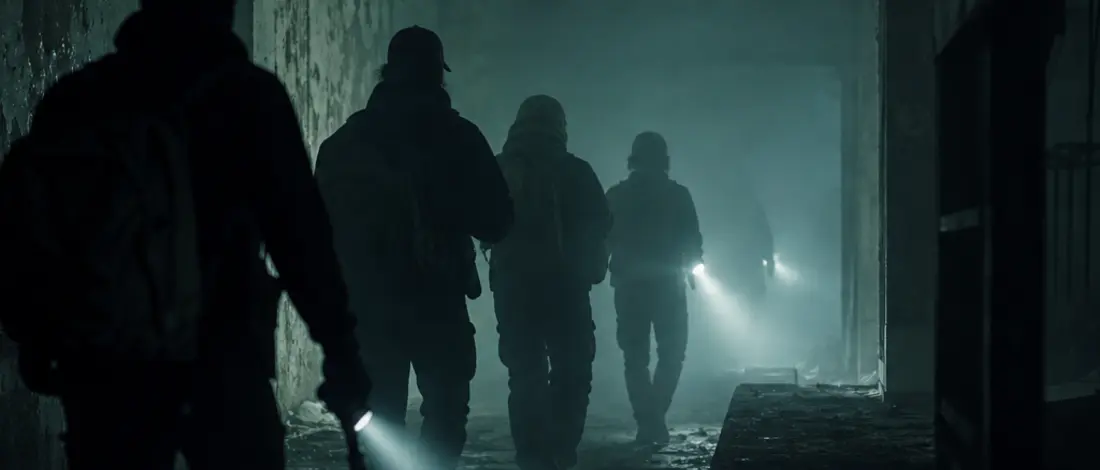
A great co-op survival horror game doesn’t keep players hooked just because it looks scary or sounds oppressive. The real obsession comes from the way its systems make ordinary choices feel dangerous, social, and unforgettable. When a squad is low on supplies, arguing over whether to push deeper, laughing through panic, and blaming each other after a disaster, that is the genre at its best. The strongest hooks in these games come from smart game mechanics that blend fear, teamwork, and uncertainty into a loop that always seems to promise one more run.
Why a Great Co-Op Survival Horror Game Feels So Hard to Put Down
At its core, a co-op survival horror game fuses three pressures that are powerful on their own and even stronger together: fear, scarcity, and cooperation. Horror creates dread, survival systems create consequence, and multiplayer turns both into social drama. You are not just worried about what is in the dark; you are worried about what your friends will do when the lights go out, the ammo runs dry, or the exit suddenly feels too far away.
That is why shared fear tends to stick harder than solo scares. In many survival horror games, the memorable moment is not the monster reveal itself but the human reaction around it: the panicked callout, the selfish sprint to safety, the heroic save, or the total breakdown of a plan. Atmosphere matters, but atmosphere alone rarely sustains long-term replayability. Players keep coming back because the underlying game mechanics consistently generate tension and surprise in ways that feel personal.
The big question, then, is simple: what makes players say “one more run” after a brutal loss or a narrow escape? Usually it is not a cutscene or a jump scare. It is the way systems combine to create pressure, force choices, and leave just enough room for mastery that the next attempt feels winnable.
Shared Vulnerability Turns Simple Encounters Into High-Stakes Team Drama
The fastest way to make cooperation matter is to make everyone fragile. Limited health, low ammo, finite batteries, breakable tools, and rare safe rooms ensure that no one feels fully in control. In strong survival horror games, weakness is not a punishment layered on top of the action; it is the engine that gives every choice weight. If resources were abundant, the group could brute-force every encounter and fear would evaporate.
Limited resources also create dependency. A player carrying the only medkit becomes instantly important. Someone hauling a heavy objective item cannot defend themselves properly. A teammate with a scanner, keycard, or lockpick becomes central to progress even if they are poor in combat. These role gaps prevent lone-wolf behavior and turn simple movement through a hostile space into live negotiation. Who leads? Who watches the rear? Who burns the last flare now, and who regrets it later?
You can see this logic across titles like The Forest, Sons of the Forest, and GTFO, where revives, item hauling, and covering blind spots create some of the most intense moments. Even basic actions become dramatic because failure is shared. A missed shot is not just your mistake; it may become everyone’s problem thirty seconds later.
Unpredictability and Information Gaps Keep Every Match Fresh and Frightening
Fear weakens when players can fully script it. That is why unpredictability is one of the most important game mechanics in the genre. Randomized loot, altered objective placement, enemy variation, weather effects, map modifiers, and shifting hazard patterns all protect the experience from becoming routine. The best systems do not create chaos for its own sake; they create enough uncertainty that players must stay alert and adapt.
Uncertainty becomes even more effective when it is tied to missing information. If the group does not know exactly where the threat is, what triggered it, or how much time remains, team communication becomes part of survival. People start second-guessing what they saw and heard. One player insists the hallway is safe, another swears they heard movement, and suddenly the real tension is the gap between information and confidence.
That is a huge part of why Phasmophobia and Lethal Company feel so replayable. The broad structure may stay familiar, but each run introduces different combinations of clues, hazards, timing, and human error. Hidden objectives, inconsistent enemy behavior, and unclear tells stop players from settling into autopilot. As soon as routines begin to form, a system bends just enough to make fear feel fresh again.
Pressure-Based Game Mechanics Create the Perfect Risk-Reward Loop
If unpredictability keeps players cautious, pressure keeps them moving. Extraction systems, countdowns, noise meters, patrol escalation, and rising threat levels all create a classic risk-reward loop. The group knows they should leave, stay quiet, or take the safe route, but the possibility of better loot, a bigger objective payout, or a cleaner run tempts them into pushing further. That friction between greed and survival is one of the genre’s strongest hooks.
The reason it feels so compelling is psychological as much as mechanical. Small wins earned under stress feel bigger than large rewards earned comfortably. A single battery recovered while a creature is hunting the team can feel more satisfying than a full inventory collected in peace. Near-miss moments are especially potent because they blend relief, pride, and regret. Players leave thinking they were smart, lucky, or one bad decision away from disaster, and all three reactions encourage another attempt.
Good pacing matters here. Strong survival horror games alternate panic with brief recovery, then threaten the team again before comfort settles in. That rhythm creates suspense and supports mastery at the same time. Players learn systems, but they never get to relax for long enough to fully tame them.
Team Communication Systems Make Fear More Social and More Strategic
Few mechanics are more influential than team communication, especially when the game makes communication imperfect on purpose. Proximity chat, radio distortion, limited voice range, partial pings, and shared information tools all turn talking into gameplay instead of background convenience. In a horror setting, even a simple “Where are you?” can carry enormous weight when the answer comes through static or not at all.
Restrictions are what make these systems sing. If every player always has perfect voice contact and perfect information, coordination becomes too clean. But when teammates can get separated, misunderstood, or overloaded, communication itself becomes a survival skill. That is where the funniest mistakes and most memorable clutch moments live: the last-second warning, the wrong door callout, the panicked lie about being fine, the accidental bait play that somehow works.
These designs also create social roles naturally. One person becomes the shot-caller, another becomes the scout, another folds under pressure, and another stays eerily calm. Trust and blame emerge without the game needing to script them. For retention, that matters a lot. Players do not just return for monsters or maps; they return to relive and reshape the group dynamic.
Asymmetric Threats and Distinct Player Roles Deepen Mastery Over Time
Long-term obsession usually depends on depth, and depth often comes from asymmetry. In asymmetric multiplayer setups, one side follows different rules than the other, creating constant adaptation. Dead by Daylight is the obvious example: survivors and killer operate with radically different information, movement expectations, and win conditions. That uneven power balance gives every match a built-in story arc and keeps skill expression varied.
Even outside fully asymmetric multiplayer, role identity matters. A good co-op horror squad often includes specialists: the scout who gathers information, the support player who manages utility, the bait who draws danger away, the objective runner who finishes tasks under pressure. GTFO leans into this by making positioning, loadouts, and coordinated execution matter as much as raw shooting. Not every player needs to do everything, and that is exactly the point.
This structure improves replayability because mastery becomes layered. First you learn the map. Then you learn the threats. Then you learn how different roles interact. Finally, you start learning your teammates: who overcommits, who hesitates, who can be trusted with the critical tool. That counterplay, against enemies and alongside friends, gives players a reason to keep improving without making the experience feel inaccessible.
The Best Survival Horror Games Hook Players When Mechanics Support Stories Players Create
The best survival horror games do not rely on a single trick. They combine fragility, uncertainty, pressure, communication, and role-based mastery into a loop that constantly produces fresh situations. What players remember most is rarely a stat screen. It is the story that emerged from the systems: the door someone should have closed, the rescue that almost worked, the selfish escape nobody will forgive, the miracle extraction with one sliver of health left.
That is the real secret behind enduring design. Great game mechanics create conditions for player-made stories, and those stories are what keep groups talking between sessions and queuing for another match. For developers and players sizing up the next standout co-op horror experience, a quick checklist helps:
- Resources should be tight enough to force hard choices.
- Information should be incomplete enough to reward observation and communication.
- Threats should escalate in a way that pushes a meaningful risk-reward loop.
- Roles should feel distinct enough that cooperation matters every round.
- Randomness should increase replayability without making outcomes feel arbitrary.
That design philosophy is a big reason the genre keeps growing. Streamers amplify chaotic stories, live-service updates refresh familiar systems, and friend groups keep hunting for new shared scares. As long as developers keep building mechanics that let players create their own legends, the co-op survival horror space will remain one of gaming’s most replayable and socially magnetic corners.