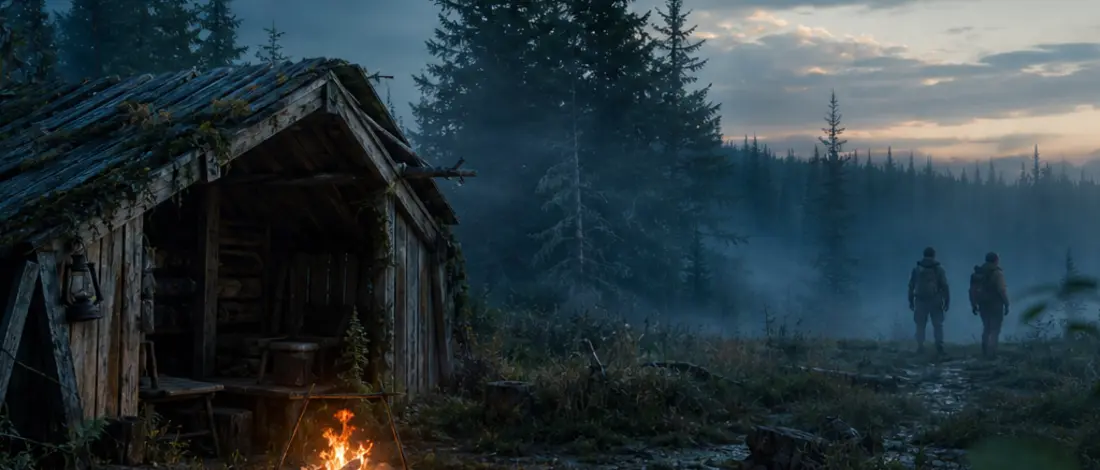
The co-op survival genre has already proven that scale alone is not enough. Bigger maps, more crafting recipes, and longer content roadmaps can keep players busy, but they do not automatically make a world feel alive. The next real leap will come from simulation: AI that behaves with intent, environments that change because of player pressure, and systems that let a squad create stories no scripted campaign could fully predict.
Where Open World Survival Games Stand Right Now
Open world survival games currently sell the fantasy of total freedom better than ever. The genre has grown around enormous maps, layered crafting trees, base building, resource routes, and live-service style updates that keep adding gear, biomes, and threats. On paper, that sounds like endless possibility, and for the first several hours it often is. Players are learning the terrain, testing systems, and improvising under pressure.
The problem is that many of those systems become readable too quickly. Once enemy behavior, loot patterns, and optimal base routines are understood, the world starts feeling static even when the map is huge. That is where survival horror games often have an edge: they deliver tighter pacing, stronger atmosphere, and more deliberate escalation, but usually at the cost of long-term systemic variety. The genre's next step is not just more space. It is worlds that react, remember, and escalate around the players.
How AI Will Make NPCs, Enemies, and Ecosystems Less Scripted
Better AI in survival design should mean more than louder marketing around generative tech. The useful version is practical and systemic: factions that compete for territory, predators that follow prey into player hunting grounds, scavenger groups that strip abandoned areas, and enemies that stop falling for the same trap every night. In a strong co-op survival horror game, that kind of AI matters far more than an NPC delivering slightly more believable small talk.
The real promise is memory and adaptation. Survivors could remember who stole medicine, settlements could raise or lower trust over time, and hostile creatures could change routes after repeated ambushes. That makes the world feel inhabited rather than staged. But there is a design risk here. Reactive AI must stay readable and fair. If players cannot understand why a threat moved, escalated, or retaliated, challenge turns into noise. The best systems will feel intelligent without feeling arbitrary.
- Faction behavior that creates conflict without scripted events
- Enemy adaptation that punishes repetition, not experimentation
- World simulation that supports tension better than dialogue alone
Dynamic Worlds Are the Real Future of Survival Design
When people talk about dynamic worlds in games, they often mean random events. That is too narrow. A truly dynamic survival world shifts through weather, ecology, migration, scarcity, collapsing safe zones, and visible consequences that reshape navigation and strategy. It is not just content appearing on a timer. It is a map developing new pressure points because players acted, failed to act, or simply stayed away too long.
This is where procedural generation works best: not as a substitute for design, but as a partner to persistent simulation. Open world survival games can stay fresh through infestations that spread, seasonal shortages that change resource value, and faction wars that redraw the safest routes. A burned forest should remain burned. A flooded valley should force detours. An abandoned camp should become a bandit outpost if nobody reclaims it. The most exciting worlds will transform based on neglect as much as intervention.
- Shifting weather and ecology that alter survival priorities
- Map-level consequences that outlast a single session
- Late-game events that feel earned rather than randomly injected
Player-Driven Stories Will Matter More Than Scripted Plotlines
The best survival stories rarely come from cutscenes. They come from a ruined escape, a desperate rescue, a risky night run for medicine, or a betrayal that changes how a squad treats every stranger afterward. In survival horror games, tension magnifies every decision, which is why emergent narrative works so well there. Systems, player choice, and consequence collide to create moments that feel personal because nobody authored them in advance.
Persistent world memory can turn small actions into long arcs. A shack defended on day three might become the group's long-term hub. A failed expedition might create a revenge run weeks later. A dead teammate might leave gear, notes, or a changed route that still shapes future sessions. Games can support that kind of storytelling without smothering it through journals, radio chatter, map markers, and player-built spaces. Future survival games should treat players as co-authors, not just tourists moving through prewritten lore.
What This Means for Co-Op: Shared Agency, Asynchronous Stories, and Better Horror Tension
Co-op survival games have the most to gain from reactive systems because every major decision is negotiated across a group. One player wants to fortify, another wants to scout, and another wants to deal with an NPC faction before trust collapses. Shared agency means the world is responding to a team with mixed priorities, not a single hero. That friction is valuable. It creates strategy, blame, heroics, and the kind of social texture no single-player system can quite match.
It also opens the door to asynchronous storytelling. If squad members log in at different times, they can inherit the consequences of earlier sessions through changed bases, missing supplies, wounded allies, and a new threat level around camp. A co-op survival horror game can push this even further with split objectives, limited communication, and enemies that react to noise, light, or familiar escape patterns. Multiplayer horror works best when teammates reduce isolation without eliminating fear. Dependency is the key, but total safety kills the mood.
- Shared roles create stronger consequences than identical loadouts
- Asynchronous progress makes every login feel like a reveal
- Fear stays sharp when cooperation helps, but never guarantees control
What to Expect Next From Survival Horror Games and Co-Op Survival
The near future will probably arrive through focused systems rather than a total genre overhaul. Expect smarter encounter directors, more persistent settlements, adaptive enemy ecosystems, and weather or ecology that changes how players move through a map. Survival horror games are especially well positioned here because they already understand pacing and pressure. Add stronger simulation to that foundation, and even familiar spaces can stay dangerous for much longer.
What will take longer is the really hard stuff: believable AI companions, narrative memory that holds together across hundreds of hours, and dynamic worlds that remain fair in multiplayer. The studios that win this space will not be the ones promising infinite content. They will be the ones combining systemic depth with clear feedback so players understand how and why the world is changing. That is the future of open world survival games: not a bigger map, but a world that seems to survive, adapt, and tell stories alongside you.