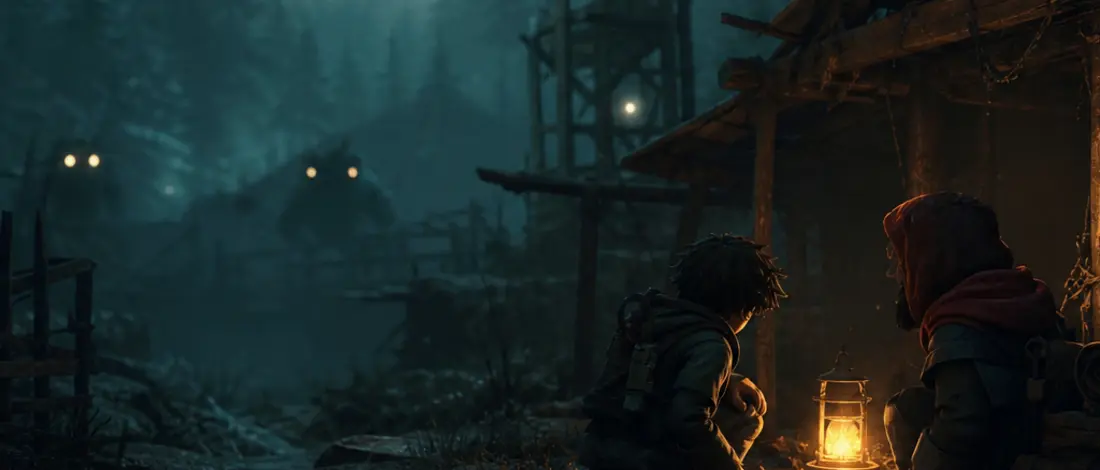
The best tension in survival games does not come from constant punishment. It comes from the feeling that something important might go wrong, while the player still has a real chance to respond. If you want pressure that sharpens attention instead of causing rage-quits, design around readable threats, recoverable setbacks, and pacing that lets stress rise and fall on purpose.
Tension Should Make Players Focus, Not Rage-quit
In survival games, healthy tension sits at the intersection of uncertainty, stakes, and agency. Players should be unsure about what will happen, care about the outcome, and believe their decisions matter. Remove any one of those and the feeling changes: no uncertainty means routine, no stakes means boredom, and no agency means frustration.
Pure frustration usually appears when the game asks for a correct response before teaching the rule, hides critical information, or punishes a single mistake so hard that the next ten minutes no longer matter. Fair pressure is different. It says, “This is dangerous, but you can still think your way through it.” That framing matters more than raw difficulty.
A useful rule for designers is simple: pressure should narrow attention, not erase options. When a player is stressed, they should become more deliberate about ammo, positioning, stamina, or route choice. They should not feel tricked into failure by invisible systems or wildly inconsistent consequences.
Build Fair Threats With Clear Tells and Time to React
Telegraphing is the foundation of fair danger. A predator’s animation pause, a hiss before a gas vent opens, a flicker before the power grid fails, or footprints near a shelter all tell the player, “pay attention, something is about to happen.” In tense systems, readable warning beats are not a luxury. They are the contract that makes hard outcomes feel deserved.
Good tells also need enough response time to support meaningful decisions. If an enemy lunges in 0.2 seconds, the only viable answer is perfect reflex. If it winds up for 1.2 seconds, players can choose between blocking, dodging, using terrain, or sacrificing resources. That is where tension lives: not in unavoidable hits, but in split-second tradeoffs between several imperfect options.
- Make bigger threats more visible than small ones.
- Match punishment to clarity: vague warning, light penalty; crystal-clear warning, heavier consequence.
- Repeat the same tell language across the game so players can build trust.
- Avoid hidden rules like invisible aggro ranges, unstated status thresholds, or off-screen one-shots unless the entire game is built around discovering them safely.
Hard rules rarely upset players by themselves. Hidden rules do. If a frost meter drains faster in wind, show blowing snow, audio change, and UI feedback. If hunger affects aim sway, communicate it before the player wastes their last bullets and assumes the weapon is broken.
Shape Pressure With Pacing, Recovery Windows, and Escalation Curves
Constant intensity stops feeling intense. Players need brief relief after spikes of danger so they can process what happened, restock, and make a plan. A safe room, a low-threat travel stretch, or a short crafting window can reset attention without draining momentum. These recovery windows are not anti-tension; they are what let your next peak land harder.
Escalation works best when it rises in a legible curve instead of random jumps. Increase enemy coordination before damage, drain resources before removing escape routes, or stack environmental complications one layer at a time. A player can adapt to pressure that ramps. They resent pressure that seems to roll dice behind the curtain.
This is also where recoverable failure earns its keep. Let mistakes hurt without ending the run’s emotional arc. Dropping some resources, losing a safe shortcut, attracting more enemies, or damaging equipment keeps stakes real while preserving momentum. Save full collapse for repeated bad calls or ignored warning states. As a general pattern, reset pressure after a survived crisis if you want a broader adventure rhythm; let it snowball when you want a dramatic endgame where accumulated debt becomes the story.
Use Scarcity in Survival Games Without Making Players Feel Helpless
Scarcity is one of the most reliable tools in survival games because it turns ordinary actions into loaded decisions. Low ammo makes every shot louder in the player’s head. Limited food makes detours expensive. A weak flashlight changes how long someone is willing to stay underground. Shelter, warmth, medicine, and inventory space all create tension by forcing tradeoffs under uncertainty.
The trap is confusing scarcity with helplessness. If players can only fail forward into a dead-end state, your system stops being tense and starts being punitive. Good scarcity design leaves room to improvise: craft a weak backup tool, retreat to a known cache, trade speed for safety, convert one resource into another at a loss, or survive a night with debuffs instead of a game over. The player should feel squeezed, not doomed.
Make the logic of the tradeoff understandable. If carrying extra wood means less room for healing items, that is a clean decision. If the player dies because one hidden temperature threshold suddenly doubled their consumption, that feels arbitrary. In the best survival games, scarcity says, “you cannot have everything,” while the rest of the design says, “you still have a path.”
Apply the Same Principles to Incremental Games and Game Jams
The same fairness rules apply outside action-heavy design. In incremental games, tension often comes from timing and commitment rather than twitch execution. A prestige reset, a temporary production boost, an overheating system, or a risk-reward investment choice can all create pressure if the player clearly sees the costs, the delay, and the likely payoff. The mistake many incremental games make is replacing tension with waiting. Waiting is not suspense unless the player is choosing when to interrupt, cash out, or double down.
Visible goals help a lot here. A countdown to a bonus window, a meter that shows how close the machine is to breakdown, or an upgrade path that reveals the next efficiency breakpoint gives players a reason to monitor and act. Even in incremental games, telegraphing and recoverable setbacks matter. If an overclock fails, maybe the player loses current output and not permanent progression. That keeps risk exciting instead of making experimentation irrational.
For game jams, simplify aggressively. Pick one readable source of pressure that you can tune in a weekend: oxygen depletion, noise attracting enemies, day-night exposure, or a shrinking safe zone. Game jams reward small systems with strong communication, because players will forgive rough art and short content long before they forgive unclear stakes. In jam prototypes, one danger, one response loop, and one recovery tool usually beats five half-explained hazards.
Catch Frustration Early With Playtests and Anti-frustration Patterns
Playtests reveal frustration long before metrics do. Watch for players saying “that was unfair,” but also for quieter signals: they stop taking risks, blame the controls for systemic confusion, or repeat the same avoidable death because they never saw the tell. When a tester fails, ask three questions: did they know the risk, did they see their options, and did they feel responsible for the outcome? If the answer to any one is no, your tension loop needs work.
Anti-frustration patterns are not cheats; they are tools for preserving trust. Checkpoints after high-information sections, partial loss instead of full wipes, warning states before collapse, grace periods after spawning, and comeback mechanics for under-resourced players can all keep the game sharp without becoming soft. Use them where information is dense, the cost of misunderstanding is high, or randomness can compound into hopeless states.
- Every major threat has a readable tell.
- Players have at least two plausible responses under pressure.
- Consequences scale with how clear the warning was.
- Failure removes advantage, not all momentum.
- Relief beats exist between intense sequences.
- Scarcity creates tradeoffs, not dead ends.
- One playtest question is always: “What did you think would happen?”
If you want tension that lasts, design for trust first. When players believe your game is readable, consistent, and willing to let them recover, they will accept far more danger, scarcity, and stress than you might expect.