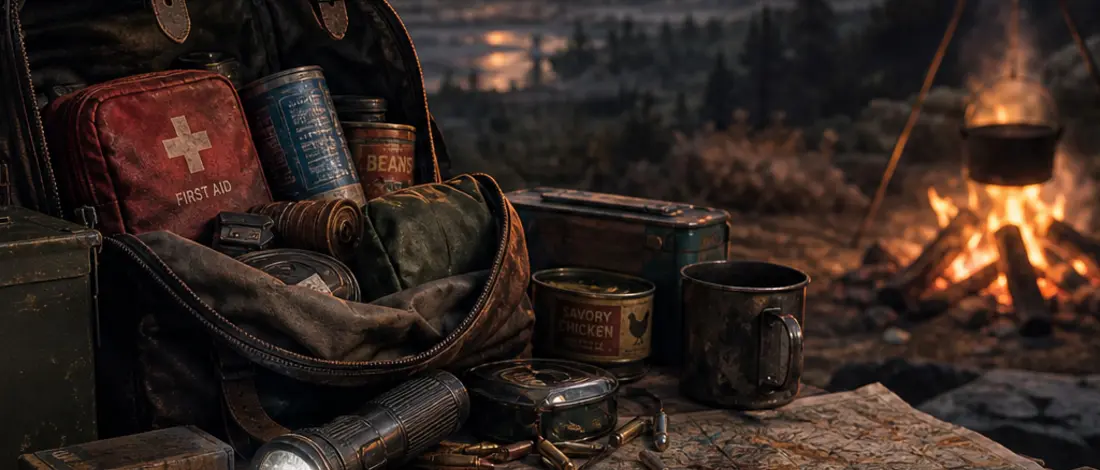
In survival games, players usually talk about combat, crafting, or base building first, but inventory management is often the system quietly deciding whether the whole experience feels thrilling or exhausting. A smart inventory turns every expedition into a risk-reward puzzle, while a bad one makes even strong mechanics feel like busywork. That matters even more in co op games, where one player’s pack, priorities, and panic decisions can shape the fate of the entire group.
Why Inventory Management Matters More Than Players Realize
Inventory management is much more than deciding where to place a bandage or how many resources fit in a backpack. In a good survival game, it controls pacing, pressure, and the kinds of choices players must make under stress. Limited space means you cannot grab everything, so every trip outside the safe zone becomes a real decision instead of a mindless vacuuming of loot.
That limitation is what makes survival feel like survival. If ammo, food, tools, and crafting parts all fit without consequence, tension disappears. Players stop planning routes, stop weighing trade-offs, and stop caring about what they leave behind. In co op games, this matters even more because carrying capacity is no longer just personal convenience. It affects who can heal, who can build, who can fight, and whether the team is ready for the next disaster.
Bad inventory design can also drag down an otherwise promising title. If the system feels slow, confusing, or overly restrictive without purpose, players do not feel challenged; they feel interrupted. The best survival experiences make inventory choices meaningful, while weak ones make players feel like they are wrestling menus instead of surviving a hostile world.
How Inventory Systems Create Tension in Survival and Horror Games
Few mechanics create tension as efficiently as a limited inventory. When ammo is low, medicine is rare, and food spoils quickly, every encounter has weight. You start asking important questions before opening a door or entering a dark hallway. Do you bring extra shells, or do you save room for quest items? Do you hold onto a repair tool, or make space for one more healing item?
This pressure becomes even stronger in horror-focused survival games because panic thrives on uncertainty. When players know they cannot carry every safety net, fear becomes more personal. A flashlight battery, a spare key, or one last medkit can feel more valuable than a weapon. That is one reason inventory systems are so effective in many free horror games: even with simpler production values, smart item scarcity can make each run feel tense and memorable.
- Scarce resources make every fight feel expensive.
- Objective items compete with survival supplies for limited space.
- Choosing what to leave behind creates anxiety before danger even appears.
- Horror benefits when players feel underprepared by design, not by accident.
The Teamwork Factor: Inventory Management in Co Op Games
In solo survival, inventory is personal strategy. In multiplayer survival, it becomes team strategy. The strongest inventory systems in co op games encourage role specialization without forcing rigid classes. One player may carry medical supplies and status cures, another may focus on ammunition and frontline weapons, while a third handles building resources, keys, or crafting parts. That division naturally creates identity within the squad.
Shared storage, item trading, and pre-mission loadout planning also deepen communication. Teams begin discussing priorities before leaving camp, not just reacting after something goes wrong. Those conversations are where cooperation starts to feel meaningful. It is also where average multiplayer titles separate themselves from the best coop games, because the system rewards coordination instead of treating every player like an isolated looter.
When coordination breaks down, the consequences are immediate. The wrong player carries the medkits, nobody brings fuel, or half the squad duplicates the same tools while ignoring food. Suddenly progression slows, resources are wasted, and avoidable deaths pile up. Inventory management works so well in co-op because it creates shared responsibility, and shared responsibility is the heart of memorable teamwork.
What Good Inventory Design Looks Like in a Survival Game
Good inventory design starts with clarity. Players should understand item value quickly, compare gear easily, and move supplies without fighting the interface. Intuitive menus, readable descriptions, sensible stack limits, and fast swapping all matter because survival games already ask players to process a lot of information. If using the inventory is harder than surviving the encounter, the system is doing too much in the wrong way.
The best systems also balance realism with usability. Weight limits, slot restrictions, and quick-access bars can all improve decision-making when they are readable and fair. A weight system can make heavy gear feel powerful but costly. Quick slots can support tense combat without removing the need to plan. Crafting integration can turn inventory space into strategy, especially when raw materials compete with finished tools and consumables.
- Menus should be fast enough to use under pressure.
- Stack sizes and item categories should be easy to understand.
- Quick-access slots should reward preparation without trivializing danger.
- Crafting should connect to inventory choices, not sit in a separate bubble.
- The system should create tension without constantly pausing the fun.
When Inventory Systems Go Wrong and Hurt the Player Experience
The most common inventory problems are not dramatic, but they are deadly to momentum. Clunky interfaces, vague item descriptions, slow transfers, and excessive micromanagement can ruin a game’s rhythm. In survival and horror, pacing is everything. If a player spends too much time sorting tiny stacks or deciphering unclear icons, the atmosphere collapses.
Overcomplicated storage can be especially damaging during high-stress moments. A game might want players to feel pressure, but there is a big difference between tension and friction. Tension comes from meaningful scarcity. Friction comes from wrestling poor controls. The same goes for balance. If resources are so rare that players feel punished no matter what they choose, inventory stops feeling strategic and starts feeling unfair.
That unfairness can hurt replay value even in otherwise strong co op games. Players will forgive a tough encounter or a brutal enemy, but they are less likely to revisit a game that made basic resource management annoying. Strong survival design keeps players thinking about the choices they made. Weak design leaves them thinking about the menu they hated using.
Why Inventory Management Helps Define the Best Coop Games
The best coop games often use inventory limits to generate stories players remember long after the session ends. Someone drops ammo at the perfect moment. One player sacrifices space for extra meds and saves the run. Another leaves behind valuable loot to carry a critical objective item. These are small mechanical choices, but they create clutch saves, tension-filled arguments, and genuine teamwork.
Compare that to games where everyone can hoard everything without trade-offs. Those systems may feel convenient at first, but they flatten the experience over time. If every player is always fully stocked, nobody has to rely on anyone else. Resource sharing loses meaning, and so does trust. Inventory management is one of the hidden reasons some survival titles earn a lasting place among the best coop games.
This also explains why some leaner survival experiences and even certain free horror games leave such a strong impression. They understand that making every item matter is often more powerful than flooding players with loot. Scarcity, when balanced well, creates cooperation, accountability, and unforgettable moments of improvisation.
What Players and Developers Should Take Away
Inventory management can absolutely make or break a survival game because it touches immersion, tension, pacing, and teamwork all at once. For players, it is worth paying attention to this system when judging a new release. A great-looking world or satisfying combat loop can only carry so much weight if the core act of collecting, carrying, and using resources feels bad.
For developers, the lesson is simple: treat inventory as a gameplay pillar, not background administration. The mechanic should support exploration, reinforce risk, and create meaningful choices both in solo survival and in group play. In cooperative survival especially, the smartest backpack can matter just as much as the strongest weapon, and that is exactly why this system deserves more respect than it usually gets.